For those who know me, it’s no surprise that over time I’ve scoured the English language and gradually settled on three favorite words. If we haven’t met, I’m Patrick Filbert, and yes—I have three favorite words.
Let’s start at the beginning (bear with me, it’s important). A postindustrial society is all about the shift from a manufacturing-based economy to a service-based one (Robinson 2016). This change sparks broad economic and social shifts (ibid). Unfortunately, many cities that relied heavily on manufacturing struggled with the transition, leading to population loss and economic decline. And there you have it—that’s the foundation!
Postindustrial Futures is mainly a response to the large cities that failed to adapt properly. This blog, Beyond the Rust, explores the reasons for these changes, their consequences, and the paths forward. For those who care, NCES classifies a large city as one with over 250,000 residents (NCES n.d.).
Stories of postindustrial decline often recount the tragic experiences of smaller cities like Flint, Michigan, and my mother’s hometown of Springfield, Ohio (truly, we won’t get into it). While these stories are important, this is not that narrative. Our focus is on larger cities—those that we believe lie at the cultural and economic heart of American society.
We focus on cities that peaked as large before losing more than 20% of their peak population… And no, that’s not just a random threshold—Mallach (2023) backs me up on that… In fact, of the 24 cities that meet this threshold, Atlanta is the only one to reach a new peak population. Boston, D.C., Jersey City, Minneapolis, and Providence can also be considered reasonably recovered1. As for the others…
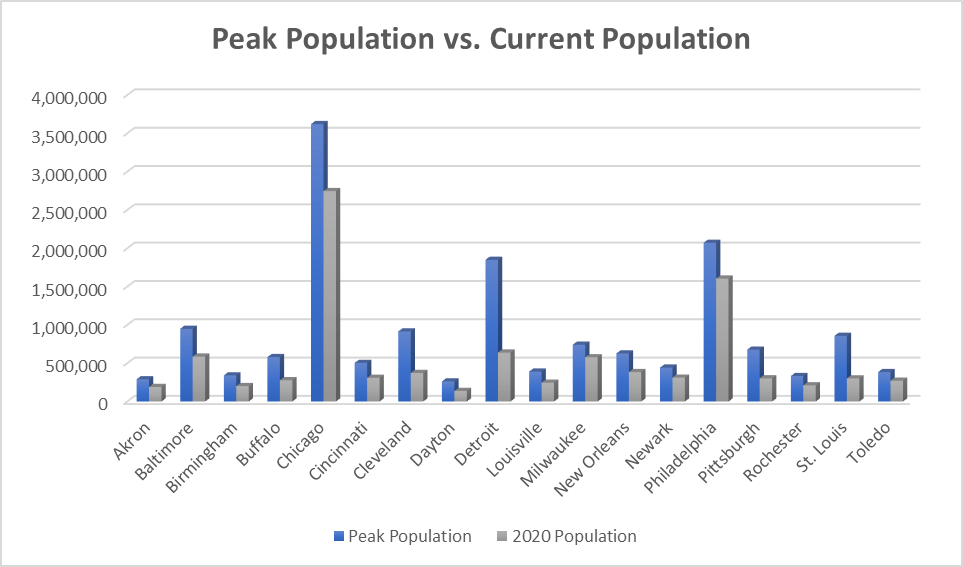
Of the 18 cities2, most lie within the American Rust Belt, and few evoke visions of the future. For many, these cities feel frozen in time. Declining, forgotten, unwanted.
Enter my first favorite word: Dichotomy. Oxford Languages defines dichotomy as “a division or contrast between two things that are or are represented as being opposed or entirely different.” Yes, I know it’s a big word, but hear me out—it’s an important word!
Rust Belt vs. Sun Belt. Past vs. future. Decline and growth. When we think of potential American futures in 2024, images that often come to mind are of the Sun Belt—cities like Austin, Houston, San Diego, Las Vegas, and, yes, Atlanta. Words that can be ascribed to these cities include booming, thriving, and desirable. And let’s face it, they’re pretty nice places. Well, maybe not Vegas…
Overall, the American imagination allows little room for the cities of the postindustrial Rust Belt to thrive in our future society. There’s a clear dichotomy between ‘postindustrial’ and ‘future’. In many ways our society believes the two are mutually exclusive—believing there are no futures for our postindustrial cities, especially if they aren’t growing in population.
To shrink is to decline. How can a city grow when it is losing population? This is a dichotomy—and one that is expected to become more pronounced as the American population likely begins declining in the 2040s3 (Mallach 2023).
Enter my second favorite word: Transcendence. Collins Dictionary describes this as: “the quality of being able to go beyond normal limits or boundaries.” Alright, alright—I get it, another fancy word. But I swear, it’s a good one!
To overcome our postindustrial dichotomy requires transcendence. And don’t tell me that’s not a good sentence… The boundary we need to cross is the idea that population decline = economic decline = societal decline.
It’s true that population growth is often linked to economic growth, especially when measured by gross domestic product (GDP). But is this really the best way to define the success of a city? Of a community?
While harder to quantify, isn’t ‘quality of life’ a better indicator of success? I believe we must focus on improving the quality of life in our communities. In postindustrial cities, this means transcending the growth/decline dichotomy and telling new stories—stories of better futures that reflect the true beauty of our great society.
Enter my third favorite word: Ethereal. Oxford Learners Dictionaries defines ethereal as “extremely light and beautiful; seeming to belong to another, more spiritual, world.” Alas, I’m a romantic—what can I say?
Before going on, I will (attempt to) stop myself and make one thing clear: I am not a Utopian, I have watched and read too much dystopian sci-fi. For every utopia, there’s a dystopia—you know how it goes. I’m not talking about building a perfect world, and I don’t believe society can—or should—be ‘fixed’. But I do believe we can transcend our current narrative and drive meaningful change through better storytelling.
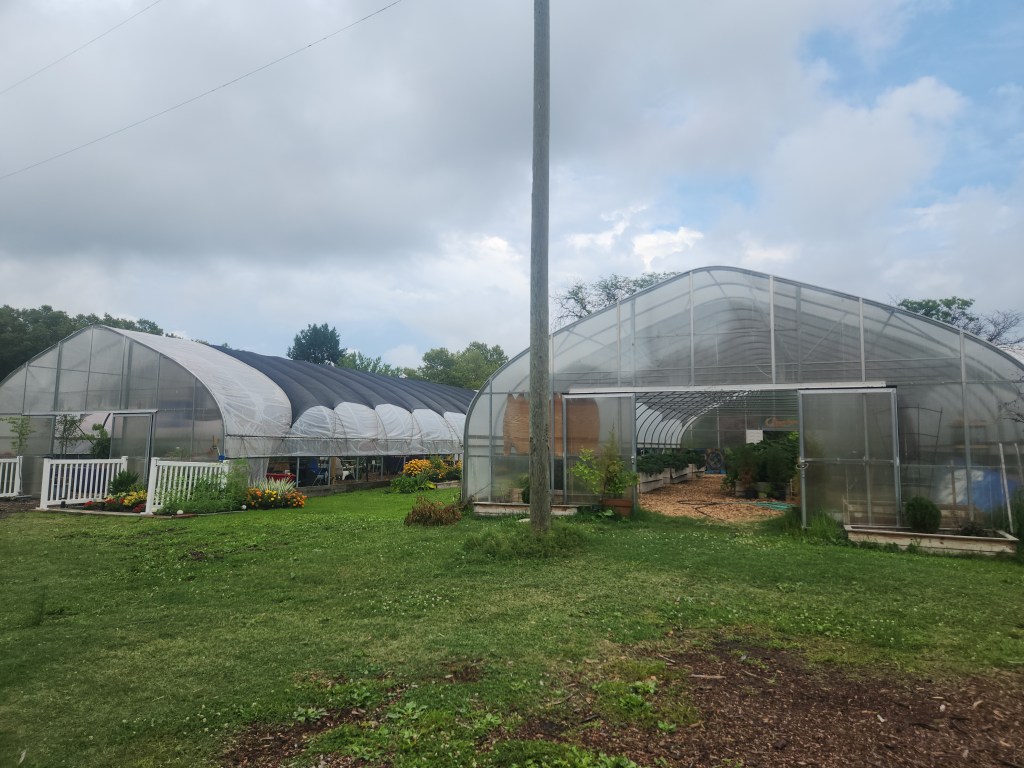
In my travels through postindustrial cities, I’ve witnessed the ethereal—most profoundly at Rid-All Green Partnership, an urban farm in Cleveland. I was kindly given a tour of the space and guided through its incredible journey of creation. While I’ll share pictures (see below) what I witnessed goes beyond what words can capture.
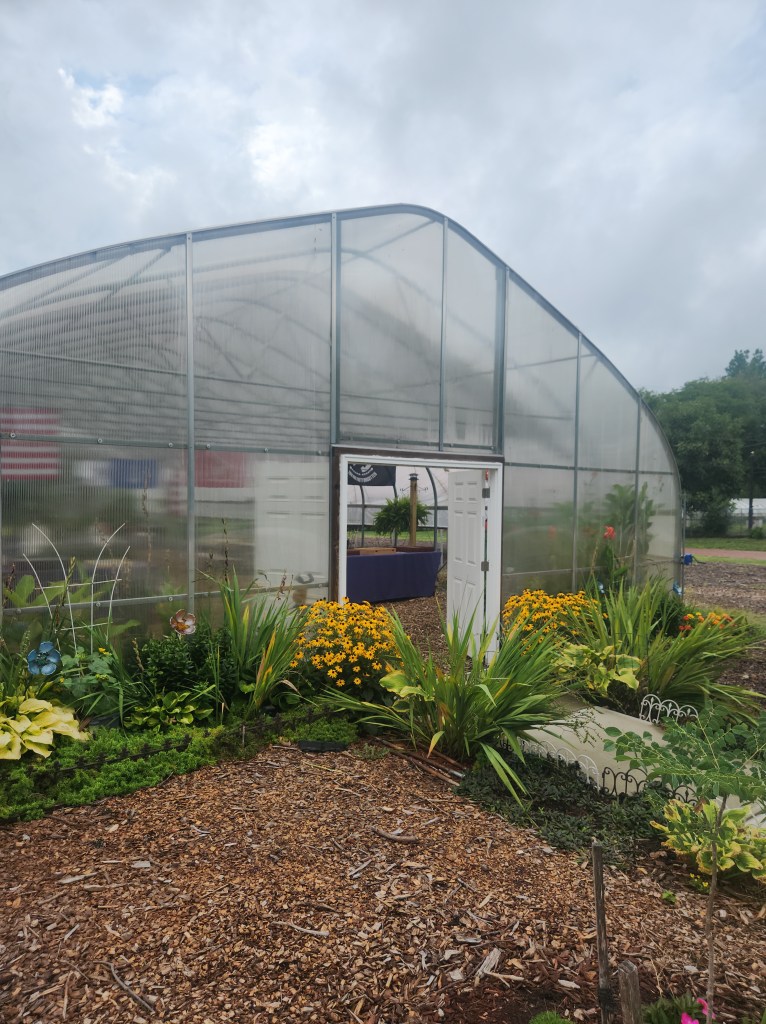

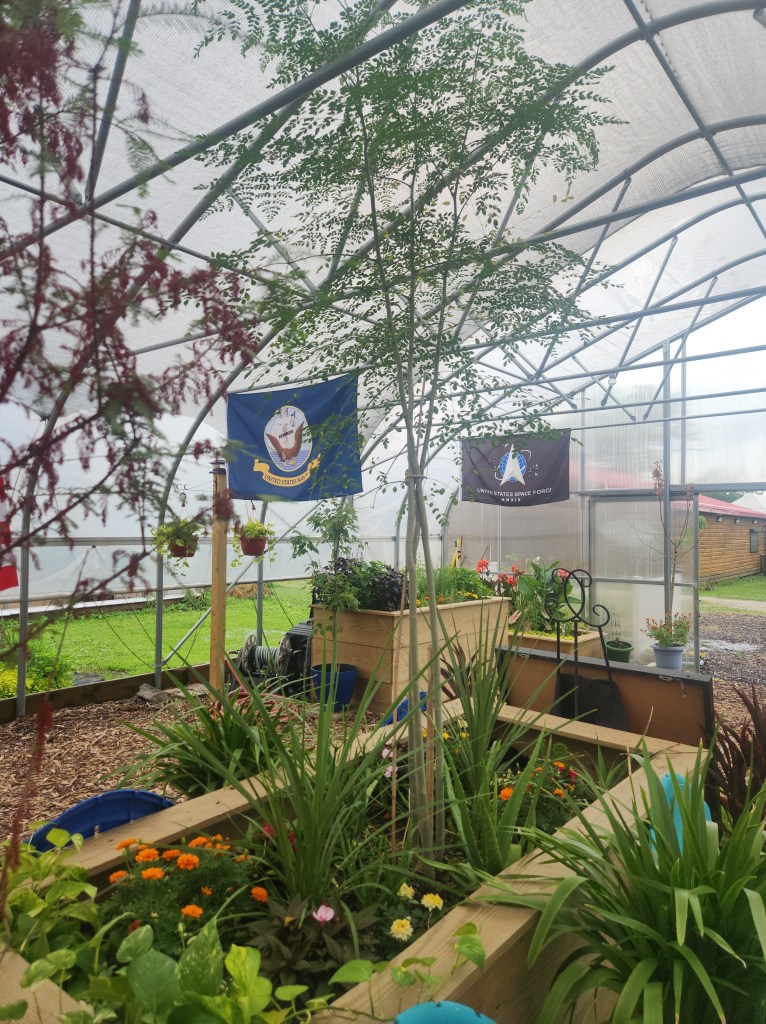
There was a power there that could only come from the fullest expression of the human spirit—not just one, but the collective spirit of an entire community. And all of this unfolded in a place where such power wasn’t supposed to exist. This was a formerly redlined community—declining, forgotten, unwanted. It was literally called the ‘Forgotten Triangle,’ it’s city kindly dubbed the ‘Mistake on the Lake.’ And yet… it was thriving.
After walking for some time, I turned to the site leader and said, ‘This is sacred ground.’ He chuckled and replied, ‘A lot of people say that.’ In that moment, I realized the site embodied what happens when barriers to creative progress are lifted, allowing the fullest potential of a space to unfold. Through this, the ethereal came to exist.
Before my visit, I had read Justine Lindemann’s paper on Rid-All Green Partnership, titled A little portion of our 40 acres: a black agrarian imaginary in the city. I believe Justine sought to evoke the ethereal in her work. One line, in particular, stuck with me: ‘Alternative visions for urban space are articulated through a determined and dynamic imagining of alternative urban futures’ (2022). Even after visiting Rid-All, that line still gives me chills. It’s the line that inspired the name Postindustrial Futures—a name meant to be dichotomous, transcendent, and, above all, ethereal.
Did I get you all the way there? Hope you enjoyed. This is Beyond the Rust. We’ll see you next month on 10/16!
- If you care, Boston, D.C., Jersey City, and Minneapolis have all dropped below the 20% threshold while Providence has grown 20% from its population low. ↩︎
- Again, if you care, Louisville is technically more populous following its 2003 city-county merger. I am using a number from the 2020 Census which appears to represent the pre-merger area. TL;DR, it’s lost population. ↩︎
- This is tied to low fertility rates and accounts for projected immigration. Demographics is destiny! ↩︎

Leave a comment