

The White City
If you were wondering whether I’m “going for it”—I am, in fact, going for it. So, who’s read The Devil in the White City? Now, I know you’re thinking, “I barely have time to read your blog and I’m quickly losing interest.” But wait! It’s a great book—not just an eye-opening perspective on psychopathy but also a window into what might be America’s greatest achievement: the 1893 Chicago World’s Fair and the creation of the White City.

Now the aim of the event was meant to showcase the rising star of the American nation. But the wondrous occasion offered a dark dichotomy—and not just because of serial killer H.H. Holmes. At the time of the World’s Fair, America was falling into a deep recession and the gleaming White City was a spectacle beyond the reach of many Americans.
The Green City
Look, America has done plenty of big, flashy things over the years—some impressive, some… less so. But what about the cool stuff happening right now? (No, I’m not talking about our 2025 military parade). How about urban communities all over America repurposing vacant land into vibrant green space?
Now it’s not the White City, but the idea of a Green City built from the ground up by neighbors planting trees and growing food? That’s pretty friggin’ sweet. And sure, there’s a lot more to the Green City movement, but I know you have to get back to scrolling TikTok so we’ll keep it moving.

Let’s get to the point. Urban greening? Pretty great, right? But we live in a universe of tradeoffs, and even the best ideas come with potential downsides. Take this one: can creating more green space actually fuel gentrification?
The Black City
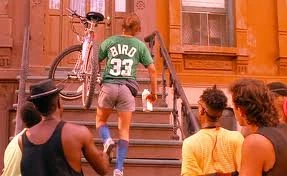
So, I was walking through Bed-Stuy, Brooklyn with my friend Kara the other day. You know… the same neighborhood from Spike Lee’s Do the Right Thing? Let’s just say things have changed in the last 35 years. Apparently, that one White dude in the Larry Bird jersey convinced all his friends to move in. Pretty sure they turned Sal’s Pizzeria into a Pilates studio.
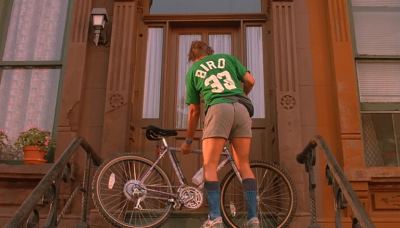
So where were we? Ah yes, 2025… Kara and I were walking down the street, past a couple of “trendy bars” and “hip cafes.” I cracked a joke that at least I found funny. Basically, we were doing White people stuff.
Anyhow, a Black gentleman popped out and said: “Get out of here with that happy sh*t—nobody’s happy you’re here.” I said, “Bro, I don’t live here,” and he shot back, “Then leave” and threw in “go die”, for good measure.
No, I’m not speaking in hyperbole—that actually happened. Ask Kara. (No, I’m not providing her info. Don’t ask Kara).
And while this guy might be described as a “certified asshat”—or, as Kara put it, “I think he’s having a bad day”—he seemed to be expressing something deeper. Something felt by a lot of Black Brooklyners… Brooklynites… Brooklynonies? (Help me out.)
Turns out, people don’t like being on the losing end of societal change. And in that moment, I saw myself: the Devil in the YT City. (It means “White people”, Dad—look it up.) And hey, we love simple explanations for complex problems.
It was me. I gentrified Brooklyn.
The Gentrified City
Wasn’t I talking about green space? Right. Let’s bring it back to cities with a lot of vacant land. Cities like Baltimore.
Here’s the thing: a successful green space can boost surrounding property values. And honestly? In many postindustrial cities, that’s not a bad thing in many ways.
After 70 years of a shrinking tax base, declining property values, and disinvestment, an increase in property values can have a lot of positives: more local tax revenue, more funding for public services, more homeowner equity, and a stronger case for neighborhood-level investment. Sounds good to me.
Well… doesn’t this also mean more YT people showing up in Black neighborhoods, expecting their “trendy bars” and “hip cafes”? Potentially. And unfortunately, a lot of them might also be from Brooklyn…

So we’ve tried to resurrect the City before… Remember urban renewal? Big plans, grand spectacles, promises of a brighter (Whiter?) future? If we want today’s reinvestment efforts to succeed without echoing past harms, we’ve got to ask: what can we do differently?
Well, the Baltimore Vacants Reinvestment Council—and your boy Pat (that’s me)—seem to be on the same page (hypothetically). The idea is to take a more community-based approach that helps legacy residents (who are often Black) remain in their neighborhoods.
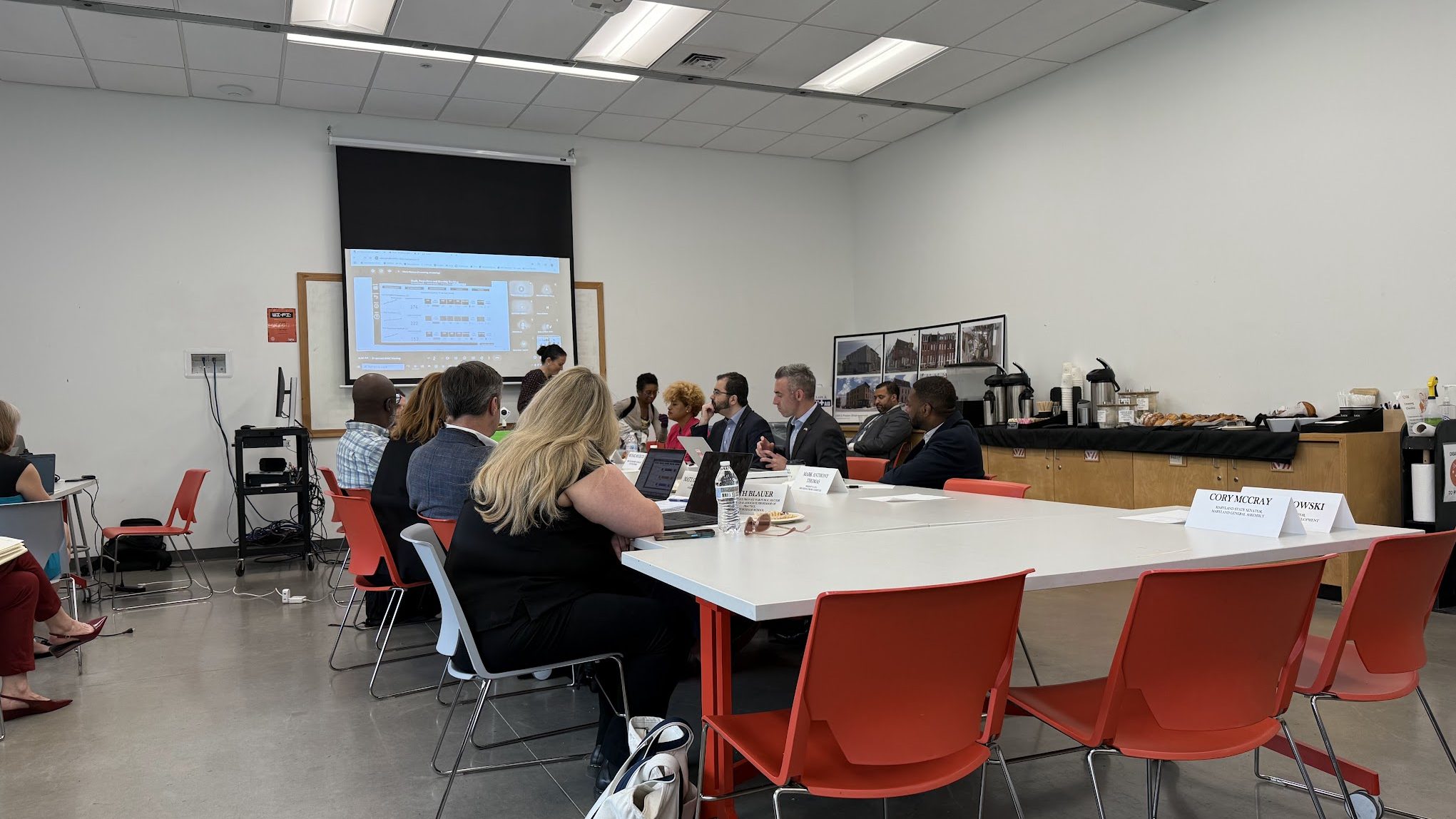
Now, let’s not pretend Baltimore is on the verge of Brooklyn-style gentrification. We’ve never seen anything like that here—and I don’t think removing parking minimums and other developer-friendly policies is going to change that overnight. But communities will change. And maybe faster than we’re used to.
The United City
So how ‘bout that community-based approach? In my work, I help communities gain control of and transform their vacant land. It’s a process that—if I’m doing it right—not only strengthens their emotional (and legal) connection to the land, but also to one another.
I’m working on providing clear strategic plans for long-term maintenance and control of community green space. And these plans—along with the green space itself—becomes an anchor for all kinds of community resources. Even without direct connections to funding or home repair programs, this work builds social capital in legacy communities. The kind of capital that prepares them for the wars to come.
Look, I’m YT, White, white, whyte… Caucasian? But I’m hoping that if I hang around long enough—and keep showing up with the good vibes (and good resources), even the most skeptical folks might eventually say, “Hey… I like your horns.”
So, what can I say? Gentrification? Tired story. Can we not have the Green City without it becoming the YT City? The best green spaces anchor communities where both legacy residents AND new residents combine their efforts to maintain something beautiful. I’ve seen it work. And isn’t that a better narrative?
Sources
- Larson, Erik. The Devil in the White City: Murder, Magic, and Madness At the Fair That Changed America. Crown Publishers, 2003.
Images
- Larry Bird 1: https://static.wikia.nocookie.net/dotherightthing/images/a/ac/Clifton.jpg/revision/latest?cb=20110411160846
- The White City: https://en.wikipedia.org/wiki/World%27s_Columbian_Exposition#/media/File:Looking_West_From_Peristyle,_Court_of_Honor_and_Grand_Basin,_1893.jpg
- Larry Bird 2: https://dotherightthing.fandom.com/wiki/Clifton?file=Clifton.jpg
- Hipsters: https://bklyner.com/op-ed-sheepshead-bay/



Leave a comment