
Mission & Vision
Mission
At Postindustrial Futures, we help urban communities transform vacant land into vibrant, community-managed green space. Through research, education, and leadership development, we foster sustainable and resilient neighborhoods.
Vision
We envision postindustrial cities where vibrant green spaces anchor thriving urban communities. In these communities residents are empowered to build strong social networks, tackle challenges together, and shape shared spaces that reflect their needs and aspirations.
Our Story
The Issue
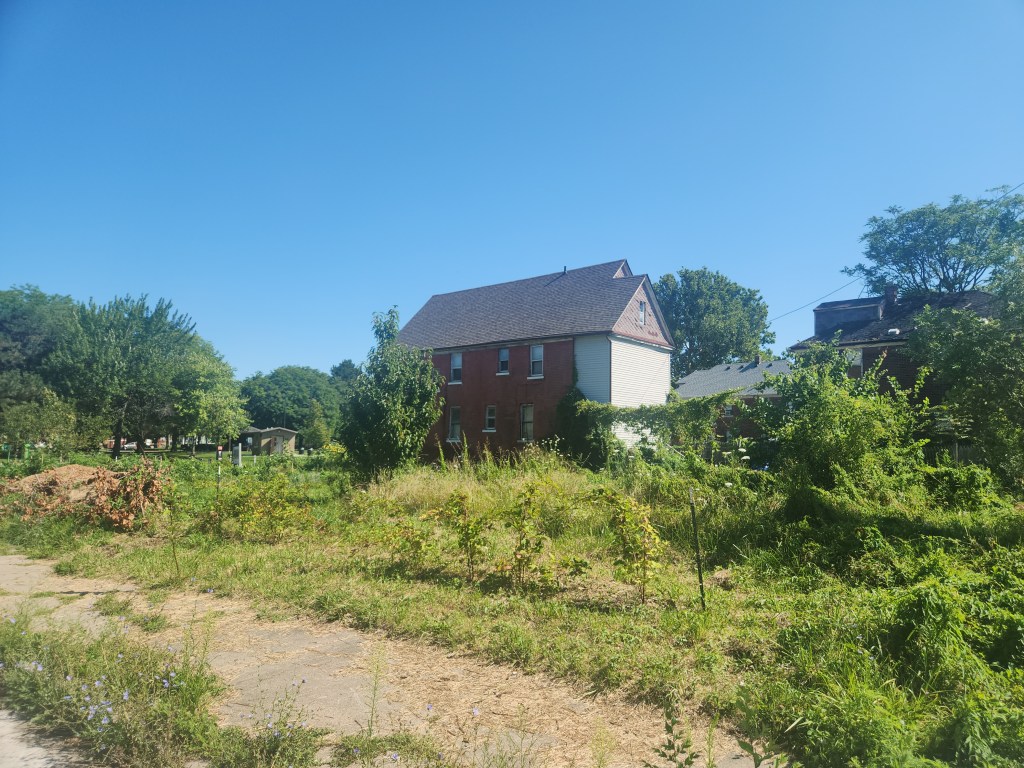
America’s postindustrial cities were once thriving hubs of industry. Today, they struggle with population loss, economic disinvestment, and their most visible byproduct: thousands of vacant lots. Despite the scale of the problem, most cities lack clear, coordinated strategies to address it.1
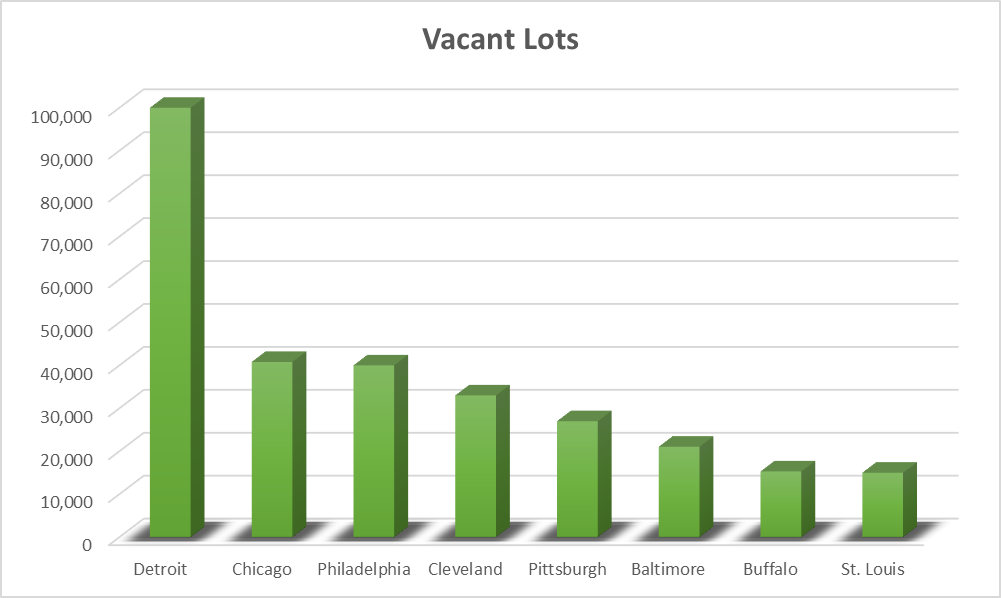
Take Detroit—America’s most extreme case of urban shrinkage. The city mows 100,000 vacant lots each year2 just to hold back blight, a stopgap that offers no lasting solution. And Detroit is not alone. Seven other major American cities each have more than 15,000 vacant lots.
The Challenge
Since the 1950s, urban outmigration has reshaped America’s postindustrial cities. What began as “White Flight” has evolved into broader demographic shifts, with many cities experiencing decades of population loss and disinvestment. While some cities have seen temporary rebounds, long-term projections show that shrinking cities will remain a widespread and growing phenomenon.3
These cities carry a dual burden: managing ongoing population decline while grappling with the long-term consequences of disinvestment, deteriorating infrastructure, and diminished tax bases. Even cities with recent rebounds, like Buffalo, remain constrained by deeper structural challenges. Buffalo alone has 15,000 vacant lots—a stark reminder of the scale of work still needed.4
So what can be done?
Community Solutions
Even given the extensive challenges, there is plenty of reason for hope. Communities across these cities are coming together to transform vacant land into parks, community gardens, urban farms, urban forests and more.
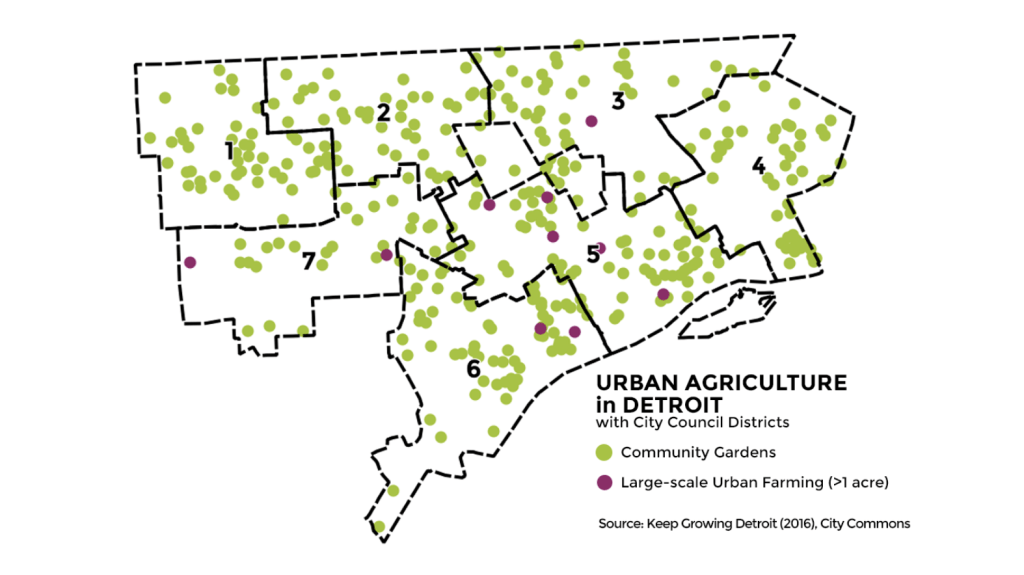
Detroit alone is home to 2,200 urban farms and gardens, engaging nearly 20,000 Detroiters.5 This represents a powerful example of how communities can reclaim land at scale.
But establishing these spaces is never easy. Residents must navigate barriers like land acquisition, utilities, soil quality, limited resources, restrictive policies, and the absence of political support. Even so, many communities have succeeded, creating models that inspire others.
Some of these sites are now permanently protected through urban environmental land trusts. In Baltimore, for instance, Baltimore Green Space protects 20 sites, while organizations in Buffalo, Philadelphia, and elsewhere are making similar impacts.
The reality is that many communities want to transform their vacant land but face barriers too high to overcome alone. That’s where Postindustrial Futures comes in. Through community-based research, education, leadership development, and strategic planning, we help neighborhoods navigate these challenges and turn vacant land into lasting community assets. Together, we can transform vacant land into lasting community assets that strengthen neighborhoods for generations to come.
Images
- Detroit Urban Agriculture Map: https://detroitography.com/2018/11/16/map-community-gardens-and-urban-farms-in-detroit-2017/
- Mallach, A. (2023). Smaller cities in a shrinking world: Learning to thrive without growth. Island Press. ↩︎
- City of Detroit. (n.d.). Vacant Lots. Detroit’s Open Data Portal. https://detroitmi.gov/departments/general-services-department/vacant-lots ↩︎
- Sutradhar, U., Spearing, L., & Derrible, S. (2024). Depopulation and associated challenges for US cities by 2100. Nature News. https://www.nature.com/articles/s44284-023-00011-7 ↩︎
- Benson, N. (2024). What should be done with the 7,000 vacant properties the City of Buffalo owns? WGRZ. https://www.wgrz.com/article/news/local/city-buffalo-owns-7000-vacant-properties-what-comes-next/71-5458bd2d-c4d7-4ab5-b4ca-da012dd2babe ↩︎
- Misuraca Ignaczak, N. (2024). Composting, water access and backyard chickens: Detroit’s urban farming evolution. Planet Detroit. ↩︎
